
Engineering
Controlled Ballast Bonding in Track Construction
Hürlimann Railtec AG’s controlled ballast bonding process offers the track construction industry a modern technology to ensure the stability and safety of railroad tracks. Engineering plays a central role in this process, as it involves selecting and applying the right materials and techniques for effective ballast bonding.
Engineering in the field of controlled ballast bonding begins with an analysis of the specific on-site requirements and conditions. Factors such as track alignment, ballast quality, ballast depth, subgrade type, loads from train traffic, and environmental influences are taken into account. Based on this information, design specifications are calculated, and suitable materials and techniques are selected.
An important aspect of engineering in the field of controlled ballast bonding is selecting the right adhesive. Various factors must be considered here, such as adhesive strength, weather resistance, and resistance to chemical influences. In addition, the adhesive must also meet the specific requirements of track construction, such as the loads from train traffic and temperature fluctuations.
Another important aspect of engineering in the field of aggregate bonding is the development of effective methods and techniques for applying the various adhesives. In this context, various factors must be taken into account, such as the correct dosage of the adhesive, its optimal distribution on the aggregate surface, and the proper curing time. In addition, safety considerations must be observed when applying the adhesive to prevent accidents or injuries.
Engineering in the field of controlled ballast bonding in track construction is a complex process that requires close collaboration between planning, engineering, and construction. Through careful planning and implementation, effective ballast bonding can be achieved.
Through continuous, independent quality inspections — including pressure and displacement measurements — calculated and assumed design parameters are repeatedly verified.
Examples of QVW Measurements
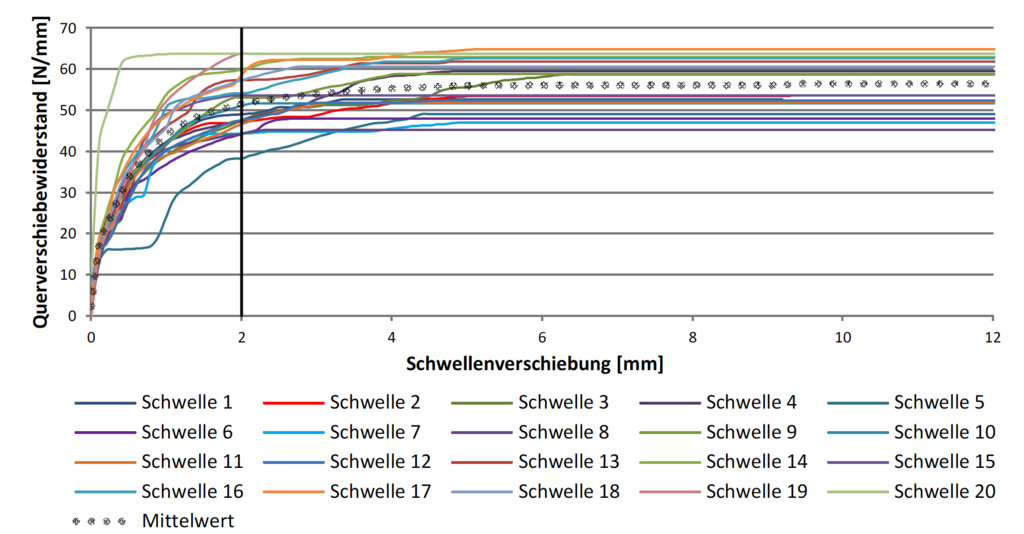
Betonschwellen L2, Schotterverklebung
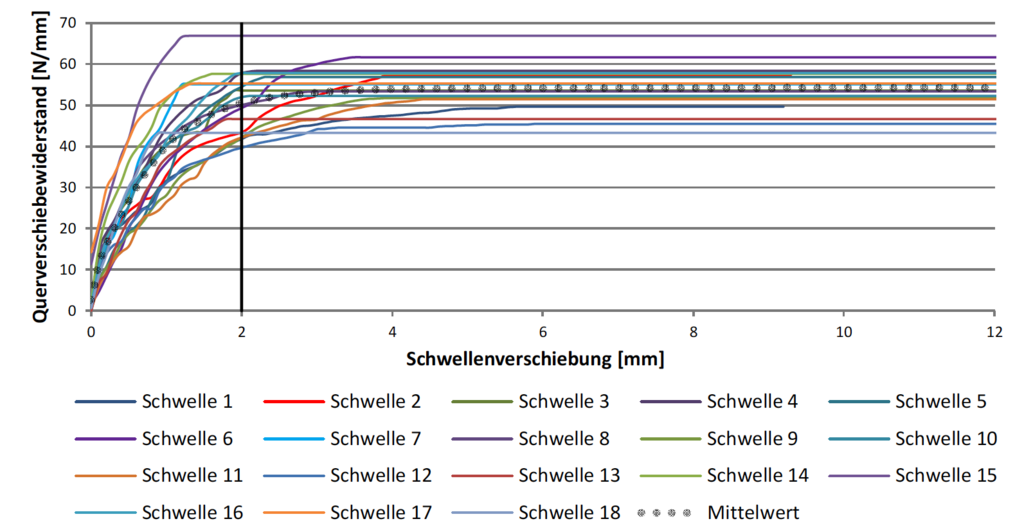
Holzschwellen, Schotterverklebung
Structural Analysis
2 BASICS
2.1 Standards, Guidelines, and Documents
2.1.1 Our reports are based on the following standards and guidelines:
[1] AB-EBV (2020) Implementing Regulations for the Railway Ordinance, Federal Office of Transportation (BAV), Bern.
[2] R RTE 21110: 2015 Subgrade and Ballast for Standard Gauge (and Meter Gauge)
[3] D RTE 22040: 2010 Standard Gauge Track Construction Manual
[4] R RTE 22041: 2019 Seamless and Tied Tracks and Switches—Standard Gauge
[5] Eurocode, DIN EN 15432
[6] SBB Regulations, I-50009:2013: Monitoring of Railway Infrastructure at Construction Sites Adjacent to Tracks.
2.1.2 Project-related documents:
[7] Longitudinal profiles
[8] Cross-sectional profiles
[9] Coordination plan
[10] Subgrade plan
[11] Project specifications for structural analysis_20220808, Hürliman Raitec form, completed
[12] Geotechnical investigations of the ballast bed
2.1.3 Produktebezogene Dokumente und weitere Grundlagen
[13] MC-Ballastbond 70 Product Sheet
[14] M. Schwalt, M. Verification Concept for Ballast Bonding by Hürlimann Railtec AG, version dated March 28, 2022
[15] MFPA Leipzig GmbH, Test Report No. PB 5.1/18-825-1, MC Ballastbond 70, Investigation of the elution behavior of a polyurethane-based injection resin, dated June 17, 2019
[16] Bachema, Ballast bonding system samples, Sample No. 5594, dated February 6, 2020 (Verification of the complete reaction of resin and hardener derived from ground adhesive)